
Agricultural Land in Kookal
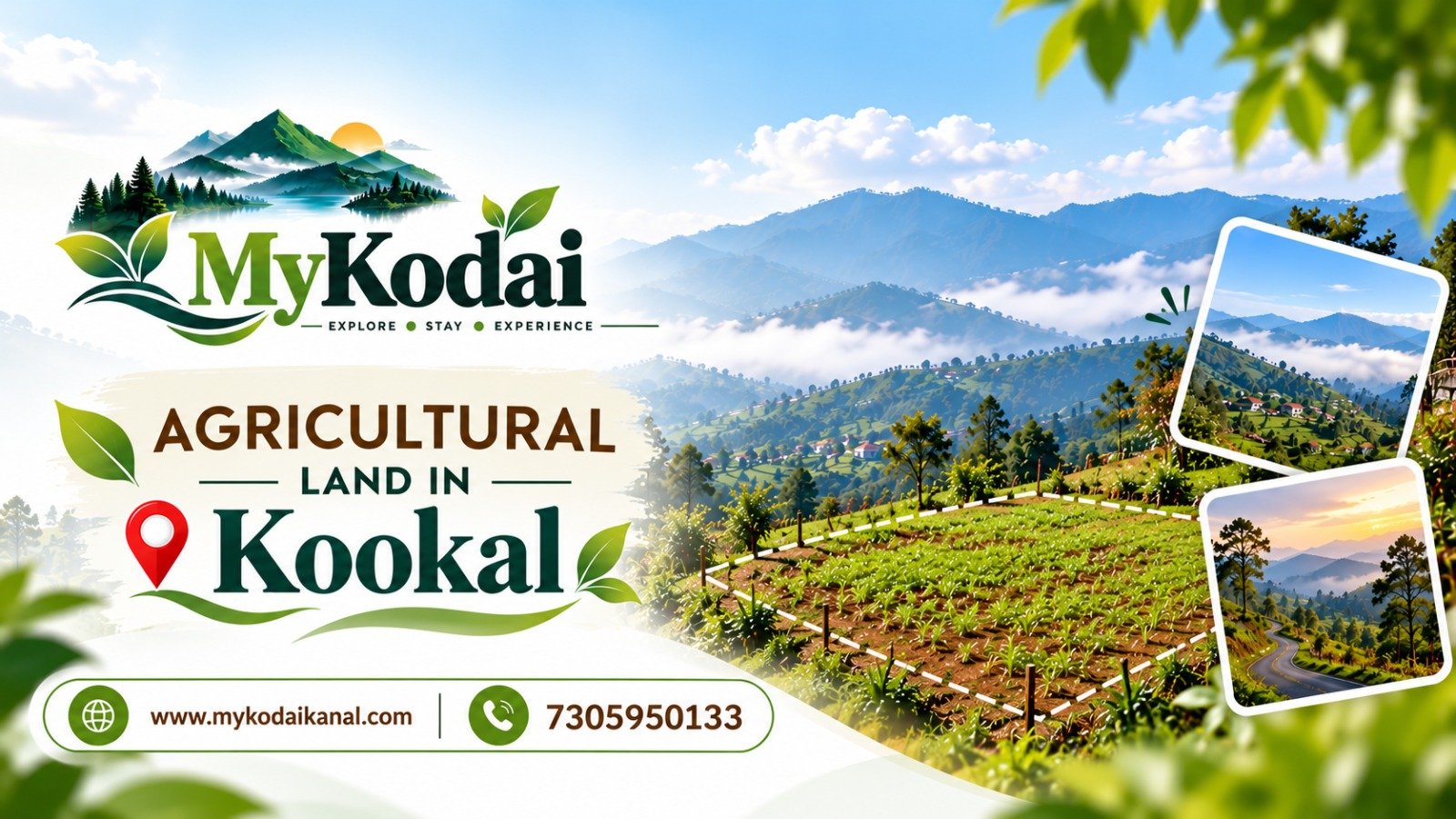
Buying agricultural land inKookal appeals to people who want to cultivate crops, develop a small orchard, or own farmland in the peaceful hills near Kodaikanal. With its rural surroundings and natural landscape, Kookal attracts buyers looking beyond crowded towns and conventional residential plots.
However, purchasing farmland in a hill region requires more than finding an attractive property at a reasonable price. Soil quality, water availability, road access, land classification, slope, and ownership documents all influence whether a plot is suitable for your plans.
Before making a purchase, buyers should verify the legal status of the property, understand the permitted land use, and estimate the costs of maintaining and developing the land. What to consider when buying agricultural land inKookal, including property prices, legal checks, farming conditions, and practical steps to help you make an informed decision.
1. Why Consider Agricultural Land inKookal?
Kookal is a rural locality in the Kodaikanal region of Dindigul district, Tamil Nadu. Buyers interested in agriculture may consider the area for its hill-country environment, open spaces, and potential for suitable farming activities.
The right property depends on your budget, intended crops, access requirements, and ability to maintain agricultural land inKookal in a hilly location.
Suitable Uses for Agricultural Land
Depending on the official land classification, local regulations, and physical conditions, agricultural land may be suitable for:
- Crop cultivation: Growing vegetables and other crops suited to local weather and soil conditions.
- Small-scale farming: Managing a small agricultural plot for personal use or local markets.
- Plantation activities: Growing suitable long-term crops after assessing elevation, rainfall, drainage, and soil depth.
- Long-term agricultural ownership: Holding land for future farming activities while managing ongoing maintenance and taxes.
Not every plot is suitable for every agricultural purpose. Land with steep slopes, shallow soil, or limited water access may require considerable investment before cultivation becomes practical.
What Makes Hill Farmland DifferentFromTown Property?
Hill farmland requires careful physical inspection. Steep terrain, seasonal rainfall, soil erosion, and difficult access roads can affect farming operations and maintenance costs.
Before making an offer on agricultural land inKookal, consider these questions:
- Can the soil and slope support your intended crops?
- Can farm vehicles reach the property?
- Is a reliable and legally usable water source available?
- Will you manage the farm yourself or employ local workers?
- How much will fencing, drainage, and seasonal maintenance cost?
Answering these questions helps you evaluate a property according to its agricultural usefulness rather than its appearance alone.
2. Types of Agricultural Land Available AroundKookal
Agricultural properties can differ significantly in their current condition, soil characteristics, and development requirements. Understanding these differences can help you choose a plot that matches your farming goals.
Cultivable Agricultural Land
Cultivable land may already be under cultivation or be ready for planting after limited preparation.
During a site visit, examine the soil depth, drainage, slope, existing crops, and water availability. Speaking with nearby farmers can provide useful information about local growing conditions and common agricultural challenges.
An actively cultivated plot may reduce initial preparation work, but previous harvests do not guarantee future yields or profits.
Plantation Land
Some buyers look for agricultural land inKookal suitable for plantation crops. However, the suitability of a plantation depends on elevation, seasonal temperatures, rainfall, soil texture, and drainage.
Consult a local agricultural officer or qualified agronomist before choosing a crop. Their advice can help you assess whether the property's growing conditions are appropriate.
Avoid purchasing plantation land based solely on attractive photographs or promises of future income.
Undeveloped Agricultural Land
Undeveloped farmland may require substantial preparation before cultivation begins.
Possible expenses include permitted vegetation clearing, soil improvement, drainage arrangements, irrigation installation, and access-track improvements.
In hilly areas, earthwork and slope modification can be expensive and may be subject to environmental or planning restrictions. Confirm the applicable permissions before undertaking any work.
Agricultural LandWithExisting Structures
Some properties include an old farm shed, storage building, well, or other agricultural infrastructure.
Inspect the condition of each structure and request relevant approval documents. Verify whether wells, access roads, water systems, and other facilities are legally established and functional.
The presence of an existing shed does not automatically mean you can construct a farmhouse, expand a building, or operate a homestay on the property.
3. Agricultural Land Prices inKookal: What Affects the Cost?
The price of agricultural land inKookal can vary according to its location, size, terrain, soil quality, water availability, road access, and legal status.
There is no single price that applies to every property. Buyers should compare several plots with similar characteristics and verify local market information before negotiating.
Important Factors That Influence Farmland Prices
- Location: Properties with convenient access to village facilities and main roads may attract higher asking prices.
- Land area: The price per cent or acre can vary depending on the size and configuration of the property.
- Soil quality: Deep, suitable soil with good drainage may support more agricultural options than shallow or rocky ground.
- Water availability: Reliable water access can improve farming practicality, particularly during dry periods.
- Road connectivity: Clear legal access and a usable road can reduce transport and maintenance difficulties.
- Terrain: Steep, rocky, or erosion-prone land may require additional expenditure on permitted land preparation and drainage.
- Existing cultivation: Established agricultural activity may reduce initial setup work, depending on the condition of the crops and infrastructure.
- Legal clarity: Proper ownership records and clearly defined boundaries help reduce transaction risks.
- Land-use restrictions: Applicable hill-area planning rules, forest boundaries, and environmental restrictions may affect permitted activities.
How to Compare Asking Prices
Before negotiating with a seller or property agent, request:
- The exact survey number and total area in cents or acres.
- The total asking price and price per unit of land.
- The official revenue classification.
- Copies of the sale deed, Patta, and relevant revenue records.
- Details of legal road access and water rights.
- Information about existing crops, wells, and structures.
- Details of mortgages, ownership disputes, or restrictions.
Compare asking prices with available registered sale information from the relevant Sub-Registrar Office. Tamil Nadu Registration Department guideline values can provide another reference point, but they do not necessarily reflect actual market transaction prices.
Additional Expenses Beyond the Purchase Price
The cost of acquiring agricultural land inKookal extends beyond the amount paid to the seller.
Include the following expenses in your budget:
- Applicable stamp duty and registration fees.
- Property lawyer and document-verification fees.
- Licensed surveyor charges.
- Soil testing and agricultural consultation.
- Permitted land preparation and drainage work.
- Boundary fencing and vegetation maintenance.
- Access-track repairs, where permitted.
- Irrigation equipment, water storage, and electrical connections.
- Labour, crop inputs, taxes, and ongoing maintenance.
Obtain estimates for major expenses before agreeing to a purchase price. A property with a low asking price may become expensive if it requires extensive preparation or improvements.
4. Legal Documents to Check Before Buying Agricultural Land
Legal verification is one of the most important stages of a farmland purchase. A seller's verbal assurances or a single tax receipt cannot establish clear ownership on their own.
Consult an independent property lawyer familiar with Tamil Nadu land records and the regulations applicable to hill areas.
Verify Ownership and Title History
Ask your lawyer to examine the property's ownership history, commonly tracing registered documents back around 30 years where appropriate.
This process can help identify previous ownership transfers, mortgages, unresolved claims, and other legal issues.
Important records may include:
- Current registered sale deed.
- Parent deeds and previous ownership documents.
- Encumbrance Certificate covering an appropriate period.
- Patta and relevant revenue records available on the Tamil Nadu e-Services Portal.
- Field Measurement Book (FMB) sketch and survey maps.
- Recent land revenue and applicable tax receipts.
- Registered easement or right-of-way documents, where relevant.
The documents required may vary depending on the property and the manner in which the seller acquired it. Your lawyer should verify the records directly with the relevant authorities.
Confirm the Survey Number and Boundaries
The physical property must correspond with its official survey records.
Engage a licensed surveyor to measure the land, verify the survey number, and examine the boundaries alongside neighbouring properties.
This can help identify encroachments, overlapping boundaries, missing land area, and disagreements with adjoining owners.
Do not assume that an old fence, stone wall, or informal boundary marker accurately represents the legally recorded boundary.
Check Land Classification and Permitted Use
Confirm the property's official revenue classification and applicable planning restrictions before deciding how to use it.
If you intend to build a house, establish a commercial operation, construct agricultural structures, or start a homestay, check the required permissions with the relevant revenue and planning authorities.
For land in the Kodaikanal region, check guidelines from the Directorate of Town and Country Planning (DTCP) to ask whether Hill Area Conservation Authority (HACA) requirements, forest boundaries, or other environmental restrictions apply to the specific survey number.
The existence of neighbouring buildings does not prove that your property has the same development rights.
Verify Access Rights and Outstanding Liabilities
Your lawyer should investigate potential issues such as:
- Existing loans, mortgages, or financial liens.
- Pending court cases and inheritance disputes.
- Boundary disagreements.
- Legally documented rights of way.
- Applicable forest or environmental restrictions.
- Unpaid taxes or other outstanding dues.
Complete the necessary legal checks before making a substantial advance payment or signing a binding agreement.
5. Soil, Water, Climate, and Road Access: Assess the Land Properly
A property may look attractive during a sunny visit, but its physical conditions determine whether it can support your intended agricultural activities.
Evaluate Soil Quality
Soil characteristics influence crop selection, nutrient requirements, drainage, and plant growth.
Arrange a professional soil test through local services or consulting guidelines from the Indian Council of Agricultural Research (ICAR) before finalising the purchase. Depending on the intended crops, the assessment may examine soil depth, texture, pH, organic matter, and nutrient levels.
Look for signs of exposed bedrock, eroded topsoil, waterlogging, and shallow soil over hard rock.
Use the test results and agricultural advice to determine which crops are suitable rather than assuming that every green hillside is productive farmland.
Confirm Water Availability
Water access is particularly important when evaluating agricultural land inKookal that needs irrigation during dry periods.
Ask the seller and neighbouring farmers:
- What water sources are available during summer?
- How does water availability change between March and June?
- Are wells, storage tanks, or irrigation systems already installed?
- How reliable are the existing water sources?
- Are there legally documented rights to use shared water sources?
Do not assume that you can freely draw water from a nearby stream or construct a borewell. Verify applicable permissions with the Central Ground Water Authority (CGWA) and local authorities before relying on any water source.
Inspect Slope and Drainage
Hilly farmland requires appropriate drainage and erosion management.
During your inspection, look for exposed roots, washed-away soil, unstable slopes, damaged retaining walls, and visible runoff channels.
If the property has steep terrain or signs of ground movement, seek advice from a qualified engineer or agricultural specialist.
Avoid unauthorised grading, excavation, or vegetation clearing, as these activities may create environmental risks and regulatory problems.
Check Road Connectivity
Travel from the nearest main road to the actual property entrance. Determine whether the access route is a public road or private track.
Verify that your legal right to use the route is properly documented and that the road can accommodate the vehicles needed for farming.
Narrow dirt roads may become difficult to use during heavy rain, potentially affecting transport to markets and the movement of agricultural supplies.
Local farmers and residents may also provide useful information about seasonal road conditions and maintenance requirements.
6. How to Buy Agricultural Land inKookal: A Step-by-Step Approach
A structured buying process makes it easier to compare properties, identify risks, and avoid unnecessary expenses.
Step 1: Define Purpose ➔ Step 2: Shortlist ➔ Step 3: Visit & Inspect
➔ Step 4: Legal Checks ➔ Step 5: Negotiate ➔ Step 6: Finalise Sale
Step 1: Define Your Purpose
Decide whether you intend to grow seasonal crops, establish a plantation, manage a small farm, or hold agricultural land for future use. Your intended purpose determines the importance of water availability, soil depth, slope, road access, and usable acreage.
Step 2: Shortlist Suitable Properties
Collect property details from established listings, local agents, and direct owners. Ask for the survey number, total area, asking price, location, official land classification, and available ownership documents. Be cautious if a seller refuses to provide basic survey information or pressures you to pay an advance before allowing document verification.
Step 3: Visit and Inspect the Land
During the site visit:
- Compare boundary markers with the FMB survey sketch.
- Check the access route up to the property entrance.
- Examine soil depth, slope, and drainage.
- Inspect existing wells, irrigation systems, and structures.
- Assess the condition of crops and nearby agricultural land.
- Ask local residents about seasonal conditions and access problems.
Record your observations so you can compare different properties objectively.
Step 4: Complete Legal and Technical Checks
Engage an independent property lawyer to review the title deeds, parent documents, Patta, Encumbrance Certificate, and access rights. Use a licensed surveyor to confirm the boundaries and total area. If you have concerns about soil, water, or slope stability, obtain specialist advice before proceeding.
Step 5: Negotiate Using Evidence
Base your offer on comparable local transactions, verified property details, and estimated preparation costs. Steep slopes, inadequate access, missing fencing, or expensive drainage requirements may affect the value of a property. Avoid relying on unsupported promises about guaranteed profits or rapid appreciation.
Step 6: Finalise the Transaction Carefully
Have your lawyer prepare or review the sale agreement. Ensure it correctly identifies the survey numbers, property area, purchase price, payment terms, and the parties' obligations. Use traceable payment methods, maintain receipts, complete registration through the appropriate Sub-Registrar Office, and apply for the relevant Patta transfer after registration.
7. Common Mistakes to Avoid When Buying Farmland
Even an attractive property can create difficulties if buyers overlook important details:
- Buying only for the view: Scenic surroundings do not guarantee suitable soil, sufficient water, or productive farmland.
- Assuming construction is permitted: Verify the land classification and applicable approvals before planning a farmhouse or other building.
- Ignoring summer water shortages: Assess water availability throughout the year rather than relying on conditions observed during the rainy season.
- Skipping title verification: Have an independent lawyer examine the ownership history and relevant legal records.
- Overlooking road access rights: Confirm that access is legally established, especially when the route crosses private land.
- Underestimating preparation costs: Include fencing, drainage, soil improvement, and permitted site work in your budget.
- Paying an advance too early: Complete appropriate legal and survey checks before making substantial or non-refundable payments.
8. Is Agricultural Land inKookalSuitable for You?
Buying agricultural land inKookal may be worth considering if you have a clear farming objective, a realistic budget, and the time or resources needed to manage a hill property.
Before choosing a plot, evaluate the following factors:
- For crop cultivation: Prioritise suitable soil, reliable water, drainage, and access to agricultural supplies.
- For plantation activities: Assess elevation, local climate, crop suitability, and the time required before production.
- For small-scale farming: Consider accessibility, maintenance requirements, labour availability, and the size of the usable area.
- For long-term ownership: Examine legal clarity, recurring costs, permitted land use, and the practicality of maintaining the property.
The most suitable property is not necessarily the cheapest or the one with the best view. It is the one that matches your intended use and can be maintained within your budget.
Frequently Asked Questions (FAQs)
1. Where isKookallocated?
Kookal is a rural locality in the Kodaikanal region of Dindigul district, Tamil Nadu. Buyers should verify the precise location and survey details of any property they consider.
2. What should I check before buying agricultural land inKookal?
Check the ownership documents, Patta, Encumbrance Certificate, survey number, boundaries, soil quality, water availability, road access, and applicable land-use restrictions.
3. How much does agricultural land inKookalcost?
Prices vary depending on location, acreage, terrain, soil quality, water access, road connectivity, and legal status. Compare current local listings and registered transactions before deciding whether an asking price is reasonable.
4. Can I build a farmhouse on agricultural land inKookal?
Do not assume that construction is permitted simply because the property is classified as agricultural land. Confirm the applicable land-use rules, planning approvals, and hill-area or environmental restrictions for the specific survey number.
5. Is agricultural land inKookalsuitable for plantation crops?
Suitability depends on elevation, rainfall, temperature, soil conditions, drainage, and water availability. Consult a local agricultural specialist before selecting a plantation crop.
6. Which documents are important when purchasing farmland in Tamil Nadu?
Commonly relevant documents include the sale deed, parent deeds, Encumbrance Certificate, Patta, FMB sketch, survey records, and evidence of legally established access. A property lawyer can identify additional requirements for the specific transaction.
7. Why is a land survey important before buying?
A survey helps confirm the property's boundaries, survey number, and measured area. It can also reveal discrepancies between the physical land and available records.
8. Should I buy agricultural land based only on photographs?
No. Visit the property, inspect the terrain and access, evaluate soil and water conditions, and independently verify the legal documents before making a purchase decision.
Conclusion
Buying agricultural land inKookal requires careful consideration of farming suitability, legal documentation, accessibility, and long-term maintenance costs. Although the area's rural setting may appeal to prospective farmland buyers, every property must be assessed individually.
Start by defining your agricultural goals, comparing suitable properties, and inspecting the land in person. Then verify the title, boundaries, water rights, access, and applicable restrictions with qualified professionals.